

Stories of the week
Jewish Americans have historically been among the most principled defenders of free speech. When a group of neo-Nazis planned to march through the town of Skokie, Illinois, home to many Holocaust survivors, it was a Jewish attorney who stood up for their right of assembly. David Goldberger, then the legal director of the ACLU of Illinois, was no self-hating Jew, and he certainly harbored no sympathy for the National Socialist Party of America. But he realized that “the constitutional guarantees of freedom of speech and press would be meaningless if the government could pick and choose the persons to whom they apply.”
*David Goldberger will be speaking at the gala to conclude FIRE’s Soapbox conference in Philadelphia, Nov. 4-6! Get your tickets now!
How far can a university stretch the definition of harassment? Far enough to investigate a professor over the phrase “word salad,” apparently. Just ask Richard Himelfarb, a political science professor at Hofstra University.
Police investigated journalist who tried to expose Cambridge professor (Telegraph) by Gordon Rayner
“I was just doing my job. Journalists should be free to ask questions of anyone, even star professors. It’s very rare that academics refuse to speak to the press – that caused me to look into this matter further and I was astonished by what I found.”
This week in ERI
What happened to the AAUP — and why viewpoint diversity matters

On July 30, the American Association of University Professors did something it has never done in its 111-year history: It endorsed a candidate for political office.
This week in Expression
Universities’ double failure on antisemitism and free speech
How does the First Amendment govern liability for AI? by Tyler Tone
A publisher does not become the guarantor of every idea it distributes, and a reader who acts badly on what he reads does not thereby transfer responsibility to the publisher.
*Tyler Tone’s last day at FIRE was this past week as he starts law school in the fall, and we’re sorry to see him go but wish him the best!
Can students learn to disagree without becoming enemies? by Willa Mack & Isaac Apple
Australia targets Telegram as Russia charges its founder with terrorism by Sarah McLaughlin
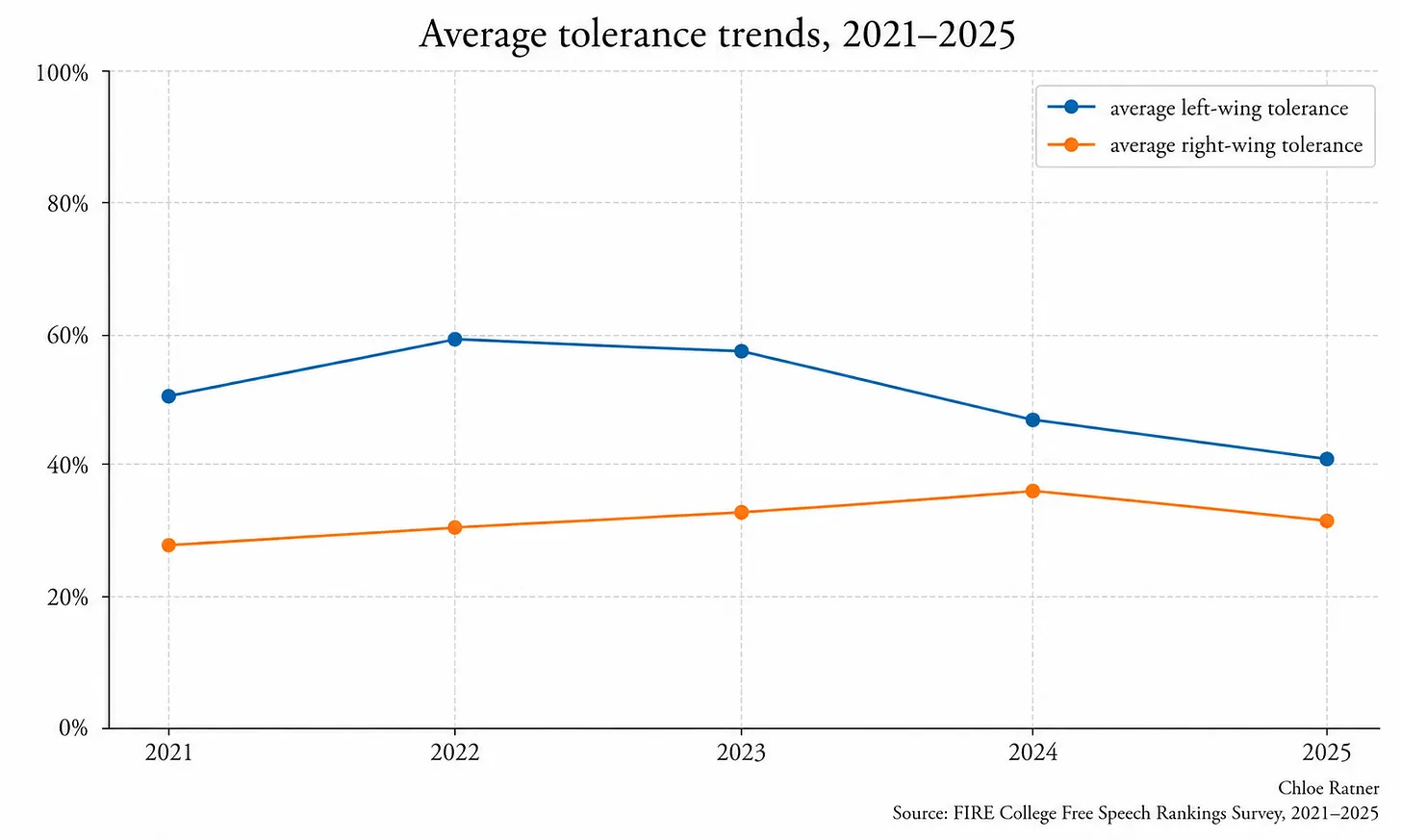
College students aren’t becoming less polarized. They’re becoming less tolerant by Chloe Ratner
This week on So To Speak
This week on So To Speak, FIRE EVP & host Nico Perrino had on Michael Tigar to discuss the landmark John Peter Zenger trial and its legacy for American free speech, as well as reflections from Tigar’s six-decade legal career — from the Berkeley Free Speech Movement and the Chicago Eight to jury nullification and lawyers’ First Amendment rights.
This week in FIRE’s blog
The real threat at Michigan’s commencement wasn’t the speech by Michelle Liao
FIRE statement: White House’s framework puts AI evaluation in a black box
AI models are expressive tools. Their creation and use fall within the First Amendment’s protection — so the government’s efforts to regulate them rightly face serious hurdles. The public is right to be skeptical of a secret process that can be abused to reward views those in power find favorable, and punish views those in power dislike.
London Calling: Ronnie’s First Amendment Roundup
The beginning of the end of the summer of ‘26 …
Another busy week, especially in U.S. Circuit Courts of Appeals, so we’re doing quick hits again:
Holding that the law is a content-based restriction that fails strict scrutiny, the First Circuit affirmed an injunction in the challenge by journalists to a Puerto Rico statute that criminalizes purposeful, knowing, or reckless warnings or false alarms related to an imminent catastrophe, or disseminating (including via social networks or the media) a notice or false alarm that puts at imminent risk the life, health, bodily integrity, or safety of others, or public or private property, during a governor-declared state emergency or disaster. The court rejected the government’s claim that the law is constitutional in criminalizing only knowing or reckless falsity, and thus falls in the category of historically unprotected false speech, as it is not simply a defamation law, then held that in targeting falsity and nothing more, the law is inherently content-based. And while Puerto Rico has a compelling interest in limiting falsehoods that risk public safety in an emergency, the law is not narrowly tailored as it applies not just if harm occurs but when it could, nor is it limited to speech that might be reasonably believed, and the government failed to show why the less restrictive alternative of counter-speech does not suffice. In upholding the injunction, the court ensures the concerns raised in the amicus brief FIRE joined with Electronic Frontier Foundation, Free Press, Freedom of the Press Foundation, and Pen America Center remain at bay.
The Seventh Circuit affirmed denial of qualified immunity to the chair of a town board of supervisors on a First Amendment challenge to his viewpoint-based deletion of comments from the town’s website. The court held that, even prior to the Supreme Court decision in Lindke v. Freed (which the chairman’s actions predated), under clearly established law: allowing comments on a town webpage creates a public forum; websites are not unique fora to which different constitutional rules might apply; the First Amendment bars viewpoint discrimination in any forum where the government hosts speech; and the comment section could not be deemed “government speech” the town could freely censor.
The Second Circuit affirmed an injunction against a New York City code section that requires food delivery platforms to share with restaurants from which they retrieve and deliver food the full name, phone number, and email and delivery addresses of the customer, and the order contents, holding it violates the First Amendment’s protections against compelled speech. The court held the required disclosure did not fall within the allowance for compelled commercial disclosures under the Supreme Court’s Zauderer decision, as it was neither about the platforms’ own services but rather third parties (the customers who order the food), nor designed to counter potentially misleading commercial speech. The court then held the law is arguably content-based and subject to strict scrutiny, but even as a regulation of commercial speech it failed intermediate scrutiny. Even assuming (without deciding) economic protection of restaurants is a substantial interest that the disclosure would directly advance, the City offered no evidence the reg serves its interests better than obvious, substantially less burdensome alternatives would—especially given the reg presumes every customer consents to having their personal information shared, and requires those who want to opt out to do so on an order-by-order basis, resulting in “a marketing list that no customer asked to join and that none can be confident they have permanently left.”
Not a First Amendment case per se, but one in which FIRE’s Supreme Court amicus brief sought to ensure constitutionally protected parody still receives the breathing space it needs, and where the Ninth Circuit has now vacated an injunction under the federal Trademark Act’s dilution-by-tarnishment provision against VIP’s “Bad Spaniels” dog toy, which mimics Jack Daniel’s black label and bottle-shape. The court held the only Jack Daniel’s marks that are famous, as anti-dilution requires, are its name and bottle shape—and not other label elements made part of the Bad Spaniels parody, like changing “Old No. 7” to “Old No. 2”—and that the trial court erred by overlooking that parodic nature in finding a negative association between the whiskey and dog poop likely to tarnish Jack Daniel’s marks. (The opinion also admirably starts with the line “A man walks into a bar.”)
Also not a First Amendment case, but here, the Ninth Circuit vacated a preliminary injunction granted to Amazon under the Computer Fraud and Abuse Act against use of Perplexity AI products to shop for goods at Amazon.com. The court held, in part by using the Rule of Lenity, that Perplexity’s Assistant AI did not unauthorizedly “access” Amazon’s site as the CFAA requires, but rather only Amazon customers authorized by the company did so, with the AI serving as a tool for them to carry out specific acts at the website.
International free speech stories of the week
Minns government rejects expansion of hate speech laws after review recommendations made public (ABC Australia) by Nick Dole
The Minns government has rejected key advice from a review it commissioned, which recommends hate speech laws be extended to protect more members of the community.
As a result, inciting hatred against people based on sexual orientation, disability, gender identity, religion and other characteristics will not be made illegal under the Crimes Act.
Inciting hatred based on race will remain a criminal offence.
German high court rules comparing Israel to Nazi Germany is protected speech (Jerusalem Post)
X says Turkish court ordered block of Istanbul Mayor Imamoglu’s candidacy account (Reuters)
Book of the Month
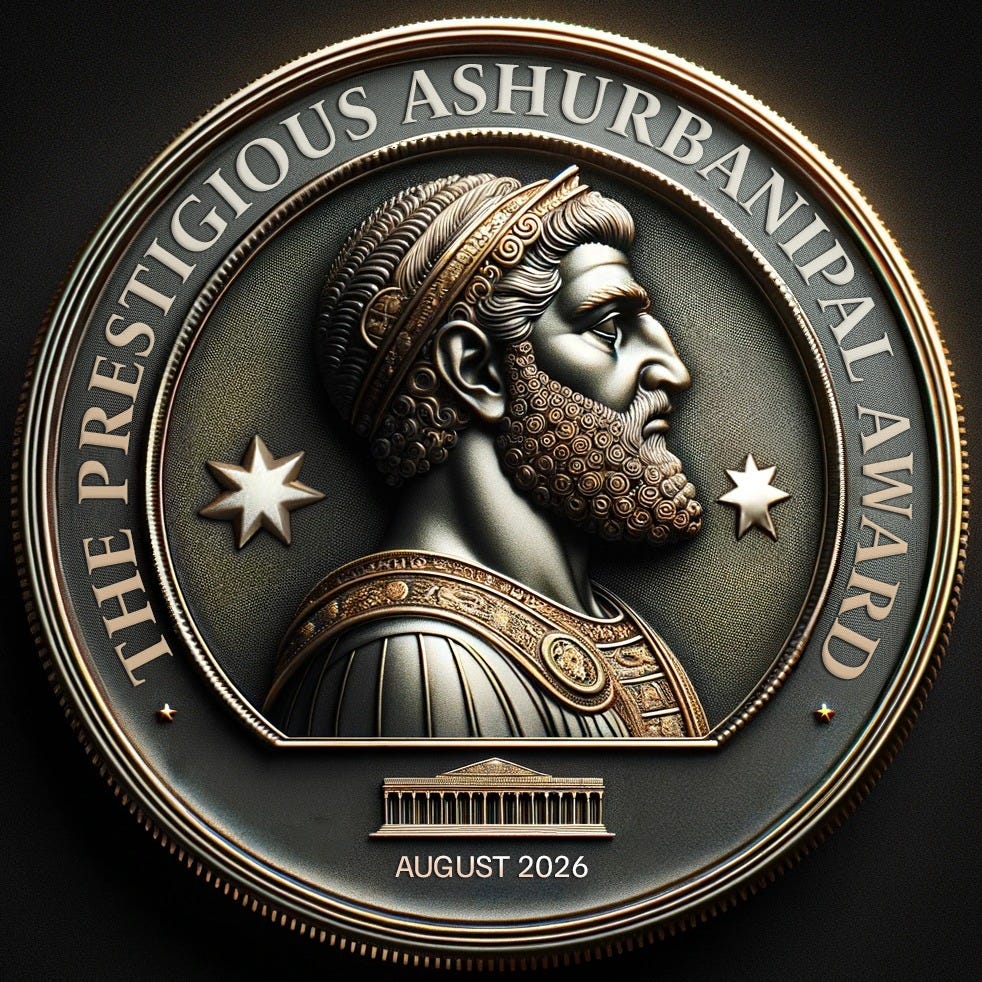
This month’s winner of the Prestigious Ashurbanipal book award goes to A World Appears: A Journey Into Consciousness by Michael Pollan. The book opens with my brilliant friend Christof Koch, who has spent his career chasing the neural basis of consciousness and is one of the leading champions of Integrated Information Theory. The book leaps right into the real question: what even counts as consciousness in the first place? Coherent thoughts? We’re certainly not all walking around narrating in words — not everybody has a clear inner monologue. So what’s the minimal unit? A feeling? An instinct? Something even less coherent than that, which I think we all experience anyway? And perhaps most interestingly, do plants enjoy a kind of consciousness?
I can’t do the book justice here. You have to sit with it yourself, and I think you’ll enjoy the time spent with the topic, and with Pollan.
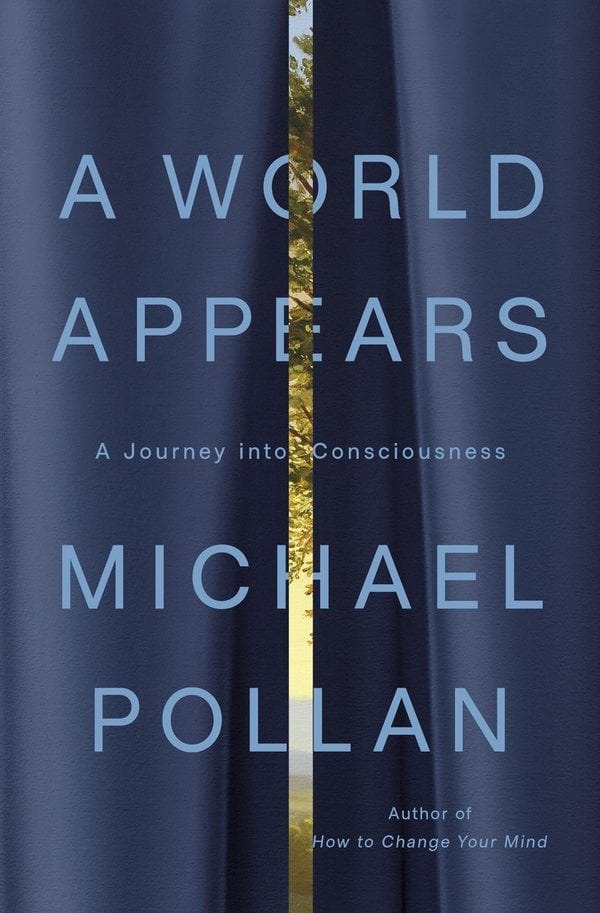
NOTE: Christof, incidentally, co-hosts a terrific podcast with Heather Berlin called Science of Perception Box, which just opened its second season with my friend Camilo Ortiz as the first guest.
Regarding Jews and free speech...the year was 1961, the place was New Orleans outside the theater that was screening a benefit showing of the newly released movie, Exodus. George Lincoln Rockwell and his merry band of "storm troopers" showed up in their VW "Hate Bus" to picket the theater. Unsurprisingly, the people waiting outside the theater, many or most of whom had survived concentration camps or had lost relatives in them, mobbed the demonstrators. Police broke through and arrested them wholesale.
The ACLU, in the person of Bert Klein (a Jewish lawyer), defended them. Rockwell's comment to Klein was that, when they (the American nazi party) came into power, Klein and the rest of the Jews would be their first targets.
(Rockwell was murdered by one of his fellow party members 6 years later.)
I would argue that the Amazon and Perplexity AI case and the Door Dash case should be considered in relationship to each other.
Amazon and Perplexity supposedly didn't violate anything by allowing Perplexity access because Amazon allowed it. But Door Dash assumed that people are allowed to be added to a marketing list and forces people onto a list that they can't be sure they're excluded from.
Some people might want to be excluded from AI like Perplexity and other AI like Pangram but forcing it on users is similar to how some people can't be certain that they're not part of a marketing list because legally they are assumed to opt in.