

Stories of the week
Free Speech Will Survive (Racket News) by Matt Taibbi
This, to me, is the difference between censors and freethinkers. For the former, the world is a narrow, obvious, uninteresting place. In their misery as tenants of this uninteresting pile of particles, they become impatient to correct its wrongs. One person is hateful, another a quack, a third a purveyor of misinformation, a fourth a security threat, all should be muzzled, and so on.
Top 12 Quotes on Free Speech (The Nature-Nurture-Nietzsche Newsletter) by Steve Stewart-Williams
NOTE: Thank you, Steve, for including a couple of my quotes! It’s a real honor to be mentioned alongside some of my intellectual heroes, including Jefferson, Douglass, and Mill.
This week in ERI
Soapbox 2026: Intellectuals, weirdos, and people who felt sane until five minutes ago

Not too long before he went onstage to deliver a speech at our Soapbox gala this past Friday night, FIRE co-founder Harvey Silverglate had me sit down next to him.
This week in Expression
Prosecuting Michel Houellebecq will not make France safer, but it will be less free by Sarah McLaughlin
It is indeed often difficult to make our way through a world where people hold and express views that so fundamentally attack the parts of ourselves and our identities we hold dear. But in asking the state to play referee in those debates, and using the deeply subjective concept of “hate” as an infraction, we hand authorities the power to censor dissent.
I stood there looking at that image for quite a while because I rarely see anything from our government that is so forceful and so clear. The image was simple and the idea extraordinarily clear: the Nazi regime was attacking religious liberty in Europe and threatening the moral foundations of American life. As opposed to what we see with many leaders today who hedge and hesitate in condemning illiberal behavior, our government back then was willing to say plainly which American values were under attack and what needed to be defended.
FIRE in the press!
Liberals Are Wrong to Fear the Internet (Persuasion) by Jacob Mchangama
As we approach the end of 2026, there are fresh reasons to be optimistic about the ability of democracy to resist hostile takeovers by illiberal and authoritarian governments. The same tools that too many defenders of democracy want to put under government control are the very same tools that have, in the past few months, helped defeat illiberal and populist incumbents and challengers across three continents.
London Calling: Ronnie’s First Amendment Roundup
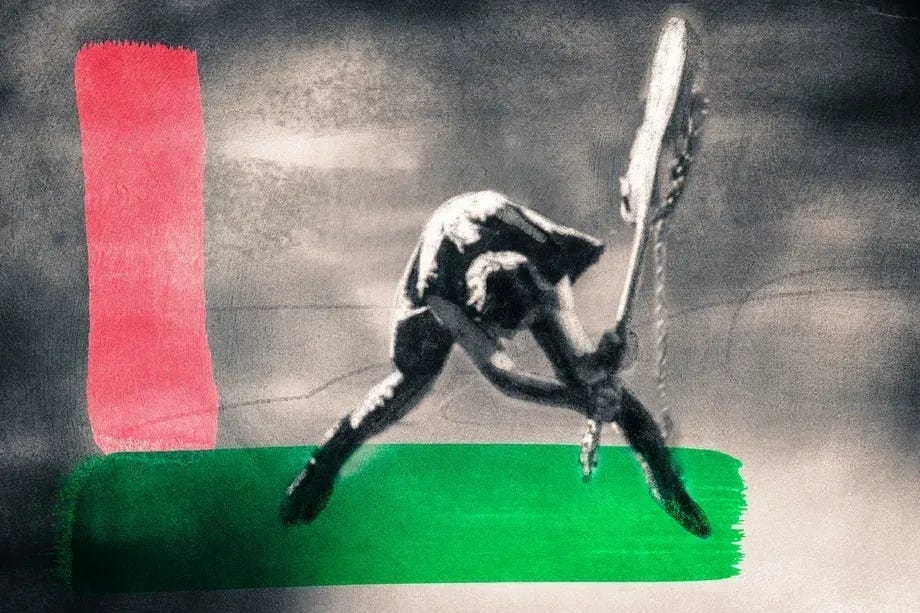
The U.S. Court of Appeals for the Fourth Circuit has ordered what appears to be significant retrenchment of efforts by federal officials to secretly obtain 18 months of LinkedIn records for a group of journalists while prohibiting the platform from disclosing the surveillance for a year. Reviewing two Stored Communications Act orders issued during a national security leak investigation, the court sent the case back to the federal district court in Eastern Virginia, holding the First Amendment bars the government from scooping up reporters’ records wholesale and gaining access to confidential sources unrelated to its investigation.
The U.S. Court of Appeals for the Fourth Circuit remanded to the federal district court in Eastern Virginia two orders issued to the federal government under the Stored Communications Act requiring LinkedIn to assemble and divulge targeted journalists’ metadata records for an 18-month period, and to not divulge that order to the targeted journalists, the news organization with which they’re affiliated, or anyone else for a one-year period.
The orders were part of a leak investigation after a news article purporting to describe a U.S. military operation in a foreign country revealed never previously reported classified information, in which the government learned of journalists identified on LinkedIn as associated with the news outlet, and that some of them may have communicated with confidential sources on the platform. During the 18‑month period in question, the targeted journalists collectively published nearly 1,000 different articles on a variety of topics, less than 5% of which appear to have anything to do with the subject at issue.
The appellate court reversed as substantially overbroad the order to produce the journalists’ data and, finding the nondisclosure order both similarly “quite broad” and a prior restraint, directed that LinkedIn be at least allowed to share the order with a single attorney for the news outlet so it can assist the court in identifying feasible avenues for narrowing the disclosure order, unless the government can show on remand that would somehow compromise its investigation.
With respect to the case’s constitutional dimension, the court held “[t]he statutory limits of the SCA do not stand in isolation” but “are conjoined with, and bolstered by, the dictates of the First Amendment.” Noting compliance with the order “would reveal every confidential source the targeted journalists interacted with through LinkedIn during the targeted … period,” the court held it might “catch sources relevant to the government’s investigation,” but “will also inevitably sweep in every other confidential source with whom the targeted journalists spoke.”
As such confidentiality of sources “is the lifeblood of a free press,” the court continued, “the ability of journalists to report on events of large importance and governmental behavior of dubious legality and integrity could not help but be hampered,” such that “the ability to speak is infringed.” And that “infringement runs in two directions, limiting both the source and the press in their ability to voice and amplify their views.” Such “[a] request by the government to scoop up reporters’ records wholesale and ascertain the identity of their sources would tip the balance against informed discourse in a manner inimical to democratic health.”
The court appreciated “the incentives … for the government to want a thorough investigation of a leak on a matter so self-evidently tied to national security concerns,” and that to “a considerable extent” it “is entitled to have its desire respected.” But that “does not translate into license to round up indiscriminately the identities of confidential and unrelated newsgathering sources.” The court thus sent the case back to the district court to revisit the scope of what LinkedIn may be ordered to disclose, and whether even narrowly divulging the order to do so to the news organization is warranted.
* If the above seems somewhat opaque, it’s not you (or me) – as the court put it: “In recognition of the national security concerns implicated by this case, this opinion must, by necessity, speak generally and omit extraneous detail.”
Bonus case: In Lattarulo v. Mullin, a Massachusetts federal court granted a preliminary injunction after Logan Airport customs and homeland security officers seized the cellphone of an immigration lawyer who works at a firm with thousands of clients in active immigration proceedings and runs an Instagram account with know-your-rights videos on immigration, holding the seizure was likely unconstitutional viewpoint-based retaliation in violation of the First Amendment, and ordering the government to preserve the cell data in its current unreadable, unreviewable format until conclusion of the court case.
International free speech stories of the week
U.K. ‘Looking Seriously’ at Including Online Marketplaces Like eBay and Depop in Teen Social Media Ban (Reason) by Elizabeth Nolan Brown
Online age verification champions are a bit like horror movie villains. Once Michael Myers gets inside a house, he’s not going to stop with just one or seven kills. He’s going to keep killing until you push him out a window, run him over with a car, and throw his body in a lake (and even then, he’ll be back again someday). Likewise, once authorities learn that the public and the courts will stand for one form of age verification—say, asking porn platforms to verify user identities—they’re suddenly off on a surveillance spree that won’t stop until the whole internet is covered. Age verification for app stores! Age verification for social media! Age verification for… eBay?
Thailand bans academic textbook citing national security (Independent) by Maroosha Muzaffar
Podcasts of the week
The Fifth Column LIVE from SOAPBOX 2026 feat. Erika López Prater (excerpt from members only episode)
Substack LIVE! announcement of the week
This Thursday at 1:15pm Eastern, I’ll be joining Heather Berlin and Berlin on the Brain on Substack Live! We’ll be talking neuroscience, free speech, and everything in between, and taking your questions. Mark your calendars and hope to see you there!