



Story of the week
The American people don’t need Brendan Carr to appoint himself as the nation’s speech police. Whether the FCC is targeting The View, conservative talk radio, or your local TV station, the danger is the same: When the government exerts power over editorial decisions, broadcasters are pressured to follow only the government-approved narratives. Viewers have less choice, see fewer perspectives, and hear fewer voices.
Cosmos Grants are back! (Cosmos Institute)
Truth is found in the open, by many people testing each other’s claims. AI can replace that contest with a single confident answer, and the disagreement that catches error begins to thin out.
Gwar you kidding me? Secret Service reportedly investigates metal band for mock Trump execution by Angel Eduardo
Despite the anger it inspired among some Trump supporters, and despite drawing the attention of the Secret Service, Gwar’s onstage antics are First Amendment-protected speech. While true threats aren’t protected, a true threat is a serious expression of intent to commit unlawful violence against an individual. It doesn’t include hyperbole, satire, or artistic expression that simply references or depicts violence, however provocative it may be.
This week in ERI
Nico Perrino on the most important free speech fight since the birth of the internet

Regular ERI readers will know that some of my biggest hobbyhorses lately have been social media, age verification, and AI — particularly how it intersects with free expression and, perhaps most importantly, truth-seeking and knowledge creation.
This week in Expression
The ‘papers, please’ era of the internet will decimate your privacy by Sarah McLaughlin
Cassius Marcellus Clay brought cannons to a free press fight by Angela Erickson
Far from a simple probabilistic machine, AI models are the direct result of human judgments about what information it should absorb, what values it should prioritize, what tone it should adopt, and what kinds of answers it should avoid.
This week in FIRE’s blog
A free America doesn’t dispatch federal law enforcement agents to intimidate someone for an Instagram post of publicly available information. Free speech is the bedrock of a free society, and the First Amendment squarely prohibits ICE agents from intimidating Americans for nothing more than repeating information from a newspaper report. As we approach the 250th anniversary of our independence from England, where police now hassle residents over social media posts, let’s not follow their lead.
“The First Amendment right to publish lawfully obtained information on matters of public concern is a cornerstone of an informed public, and California’s lawyers looked at the law and recognized it was indefensible under the First Amendment,” Steinbaugh said. “California’s legislature should follow their lead by rescinding this provision.”
FIRE in the press!
Oakland County’s Adopt-a-Road controversy is a First Amendment lesson (The Detroit News) by Jeff Zeman
But if the government prohibited speech every time it made someone uncomfortable, free speech would mean little. Public colleges could shut down both pro-Israel and pro-Palestinian speakers. High schools could censor students for supporting or opposing ICE. Police could throw people in jail for posting a meme about the president. The First Amendment protects all of us from all of that. Protecting our free speech rights means sometimes standing up for speech we don’t like — not demanding it be taken down.
London Calling: Ronnie’s First Amendment Roundup

Fifth Circuit revives First Amendment challenge to city council public-meeting open-comment speech restrictions all-too-frequently maintained by local bodies, such as against “personal,” “impertinent” or “slanderous” remarks
The U.S. Court of Appeals for the Fifth Circuit reversed the dismissal of First Amendment claims brought by a Bossier Parish (La.) online journalist and City Council meeting participant against a public-comment policy that purports to ban “personal,” “impertinent,” “slanderous,” or “boisterous” remarks, holding he sufficiently alleged the restrictions are unconstitutionally overbroad, vague, and viewpoint-based.
The court deemed the facial overbreadth challenge to the personal remarks ban to be plausibly alleged, holding it “captured nothing more than bold criticism of City Council members,” in contravention of the “bedrock principle underlying the First Amendment ... that the government may not prohibit the expression of an idea simply because society finds the idea itself offensive or disagreeable.” Based on “the ordinary meaning of ‘personal remarks,’” the court held, the policy “prohibits speakers from uttering an infinite number of protected, relevant statements or questions,” including: “(1) using a councilmember’s name for the record; (2) mentioning that a councilmember may have a personal stake in the outcome of a vote; (3) stating that a councilmember engaged in a corrupt act; (4) highlighting that a councilmember had recently been convicted of a crime; (5) claiming that a councilmember lied to the public; (6) suggesting that a councilmember had a conflict of interest; and (7) bringing to public attention that a councilmember had been sued—just to name a few.” In short, the court held the policy’s “possible applications are unquantifiable, especially when not harnessed by any limiting principle” and insofar as it “forbids a citizen from noting that a councilmember has—even questionably—done anything that may be relevant to the public.”
The court similarly held that in barring “impertinent” remarks – i.e., those “given to or characterized by insolent rudeness” or “not restrained within due or proper bounds especially of propriety or good taste” – the policy “runs afoul of the Constitution,” because it “is so unbounded and covers a substantial amount of core First Amendment activity in relation to its legitimate sweep.” “With no limiting principle, this provision effectively allows the City Council to decide which comments are permissible at its whim,” because: “If a councilmember is offended by comments that the Council does ‘not have the citizenry’s best interest in mind,’ or it is ‘breaking the law,’ or ‘not listening to the demands of its constituents,’ the Council could simply silence the speaker.” In the same vein, in banning “slanderous” comments, “used in the same way against the same backdrop” of New York Times v. Sullivan and its progeny, the policy “creates the same chill” on speech the Supreme Court identified, so, “standing alone, this proscription is overbroad.”
The court also holds “a standalone prohibition on ‘becom[ing] boisterous’ is too broad to be constitutionally permissible.” Under its “expansive definition” that “refers to both traditional speech and conduct, … banging one’s hand on the podium, emphatic hand gestures, pointing, crying, clapping, or simply shifting one’s tone could trigger application … as could any remark deemed ‘rowdy’ or inflammatory.” As with the personal remarks ban, the court held, “potential applications are limitless.”
The court next held the constitutional vagueness challenges to be plausibly pled, as “the terms ‘personal’ and ‘impertinent’—which are undefined—fail to provide speakers with a reasonable opportunity to know what conduct is prohibited,” with “boisterous” being vague for the same reason—violations “turn only on the listener’s discretion.” Further, the court held, “absent any explicit standards for those who apply the Policy to safeguard against its arbitrary and discriminatory enforcement by the City Council, the Policy’s other terms are likewise unconstitutionally vague.”
Finally, the court holds plaintiff also plausibly alleges the bans on personal, impertinent, and slanderous remarks are viewpoint-based, and thus unconstitutional in any public forum, including the limited public forum that city council meetings represent. Similar to the vagueness analysis, the court holds any such prohibition “turns on the perception of the individual councilmembers” and in doing so “constitutes unconstitutional viewpoint discrimination.” And because those prohibitions are viewpoint-based, “they are also content based to an impermissible degree and unreasonable” for a limited public forum. The court did, however, affirm dismissal of the viewpoint-discrimination challenge to the policy against boisterousness to the extent it can apply to speech without reference to viewpoint or content (as well as the dismissal of plaintiff’s state open meetings law claim).
The case thus returns to U.S. District Court for Western Louisiana to proceed on the plaintiff’s facial challenges.
International free speech stories of the week
Paris Police Ban Far-Left Concert Over Anti-Police Violence Fears (NewsFire) by Dimitris Papafotis
Japan’s Flag Desecration Bill Threatens Rights (HRW) by Teppei Kasai
South Korea’s ‘fake news’ law tests press autonomy (DW) by Julian Ryall
Among the key changes to the law are the obligatory removal from online sites of comments deemed to be false or defamatory by the Korea Media and Communications Commission, which is also able to impose fines of up to 1 billion won (around €584,000, $690,000).
One of the most controversial additions to the law — which South Korea’s ruling Democratic Party refers to as the “anti-fake news act” — is the right to demand corrections or rebuttals to editorials or opinion pieces.
Book of the month

The winner of this month’s Prestigious Ashurbanipal Award — yes, the most prestigious of all fake literary prizes — is Nita Farahany’s The Battle for Your Brain: Defending the Right to Think Freely in the Age of Neurotech (2023). It is a terrific, urgent, and skillfully written book about one of the next great frontiers of liberty: cognitive liberty. Farahany argues that freedom of thought, mental privacy, and self-determination are not abstract philosophical luxuries. They are going to become very practical legal and cultural questions as brain-sensing technology, AI, neurotech, and behavioral prediction all get better, cheaper, and more intimate.
And while “mind reading” still sounds like science fiction, the distance between crude inference and meaningful access to our inner lives may be shorter than most people think. That’s why this book matters now. Farahany provides brilliant insight on how to translate liberty into the age of supertech — how to preserve the private space where thought, dissent, conscience, and individuality actually begin. Read The Battle for Your Brain, and pre-order her next book, Cognitive Extinction: Saving Human Thought While We Still Can. Let’s make sure we are not traipsing into dystopia while congratulating ourselves for being innovative.
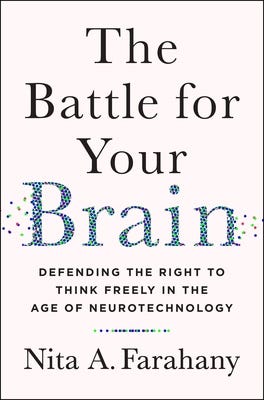
On that battle for the brain:
Ten Ways the 1% - Who Own Almost All Media and Which Have Radicalized Us Against One Another - Are Manipulating Us Right Now to Walk in Lockstep Into the Technocratic Incinerator, by Unknown
1) The first manipulation is the illusion of choice. You think you have two parties representing different visions for America but both parties are funded by the same billionaires, vote for the same surveillance bills, approve the same defense budgets, and serve the same corporate interests. The choice you are given is which color tie the puppet wears, not who controls the strings.
2) The second manipulation is emotional hijacking. The news does not inform you, it activates you. Every story is framed to trigger fear or anger or disgust because those emotions bypass your rational thinking and make you easier to control. You are not watching journalism. You are being subjected to psychological operations designed to keep you in a constant state of agitation.
3) The third manipulation is tribal sorting. The algorithm learns what makes you angry and feeds you more of it until your entire worldview is shaped by outrage at the other side. You are sorted into a tribe not because you chose it but because keeping you tribal keeps you predictable and profitable.
4) The fourth manipulation is false scarcity. You are told resources are limited and the other tribe is taking what belongs to you. Immigrants are stealing your jobs. Welfare recipients are draining your taxes. The other party is destroying your healthcare. Meanwhile the billionaire class has more wealth than any humans in history and could solve most of these problems tomorrow if they wanted to.
5) The fifth manipulation is memory holing. Stories that threaten powerful interests get buried or forgotten within days. Exposed crimes result in no consequences. Historical context that would help you understand the present is never taught. You are kept in a perpetual present with no past to learn from and no future to plan for.
6) The sixth manipulation is controlled opposition. The voices you think are fighting for you are often funded by the same interests they pretend to oppose. The outrage merchant on your side of the aisle is playing a character designed to keep you engaged and angry and tuned in while nothing ever actually changes.
7) The seventh manipulation is the Overton window. The range of acceptable opinion is artificially narrowed so that anything outside it seems extreme. Ideas that were mainstream fifty years ago are now treated as radical. Ideas that serve elite interests are treated as moderate common sense. You are not choosing your beliefs from the full range of human thought. You are choosing from a menu they wrote.
8) The eighth manipulation is learned helplessness. You are shown so many problems with no solutions that you eventually give up and accept that nothing can change. This is intentional. A population that believes resistance is futile does not resist. They scroll and complain and feel superior for understanding how bad things are while doing absolutely nothing about it.
9) The ninth manipulation is identity capture. Your political affiliation becomes your identity, and any attack on your party feels like an attack on you personally. This makes you defend politicians and policies that harm you because admitting they are wrong would mean admitting you were wrong, and your ego will not allow that.
10) The tenth manipulation is the most insidious of all: you are manipulated into believing you are too smart to be manipulated. Every person reading this thinks the manipulations I described apply to other people, the stupid people, the brainwashed people on the other side. That certainty is itself a manipulation. The moment you believe you are immune is the moment you become most vulnerable.
Here are well over a dozen Fox, CBS, ABC, & NBC local news stations all reading an identical script sent down from their singular overlord to crash & burn alternative media in order to enhance the Oligarchy’s Overwhelming threat to our democracy:
https://substack.com/@tritorch/note/c-208406729
Ultimately we are not consuming news. We are consuming a product manufactured by the richest men in human history, and that product is designed to do one thing: keep us so busy fighting our neighbors that you never notice the chains being fastened around our wrists.
Please read my DM