


In case you hadn’t heard, my Coddling of the American Mind co-author Jon Haidt was invited to give a commencement speech at New York University last week, and it led to an uproar from students.
This was, in one sense, ordinary university life: students objected to a speaker, people argued about it, some booed during the speech, and others defended him. It didn’t lead to a sustained disruption of Jon’s remarks, so great. I’ve defended the right to protest on campus more than practically anybody in the United States, and this was well within the bounds of what you’d expect to see.
The more troubling part was why NYU’s student government leaders called on the university to disinvite Jon in the run-up to commencement. “Students are astonished by the university’s inability to leverage its vast network and unique connections to secure a speaker whose scholarship and global contributions more accurately reflect the values and diversity of its graduates,” their statement read.
Once again, these students are free to object, and I will defend their right to do so. But I can (and, I believe, should) criticize their reasoning. For one thing, a university is not a mirror. It is not supposed to show students an image of themselves with better lighting. At its best, it exposes them to people who know things they do not know, who see things they do not see, or who may even be wrong in useful ways. That’s the purpose of a university education: to cause reflection, not be a reflection. It is unsettling, though unsurprising, that this graduating class got through their years in higher ed without recognizing that.
And now that Jon has actually delivered his commencement address, we do not have to guess what terrible burden he imposed on these NYU graduates. His talk, published in full by The Atlantic under the title “Pay Attention,” turned out not to be a declaration of war on the graduating class. The editors even note that they reproduced the speech “so that readers may judge it for themselves.”
Jon opened by joking that NYU graduates had heard from “prime ministers, presidents, Supreme Court justices, movie stars, civil-rights crusaders, and Taylor Swift,” and must have been thinking, “Finally, they brought in a social psychologist!” He then told them to “treasure [their] attention,” because “what you pay attention to shapes what you care about. And what you care about shapes who you become.” He warned that phones, apps, social media, video games, dating apps, gambling, and even investing platforms are increasingly built to capture attention rather than earn it. He gave concrete advice from his NYU “Flourishing” course: turn off most notifications, add friction to social media, spend time with real people in the real world, and do hard things.
If this is a war on students, it is being waged with the deadly weapons of obvious life advice and mild dad energy.
Nonetheless, I spent more of my weekend than I care to admit arguing with students and their defenders, and I came away convinced that a lot of people badly misunderstand both Jon’s arguments and what we actually wrote in The Coddling of the American Mind.
So below, I’m going to paraphrase the main objections and answer them in listicle form, because sometimes civilization advances one numbered grievance at a time.
1. ‘The Coddling of the American Mind says modern students are spoiled little brats.’
No, it doesn’t.
In fact, as Jon and I have explained pretty explicitly — including in this video discussion of the book and documentary — I have never loved the title The Coddling of the American Mind. If I’d had my way, the title would have been Disempowered because that was always the point: not that students are spoiled brats, but that adults and institutions have been teaching them ideas that make them feel less capable, less resilient, and less in control of their own lives.
Jon and I also said in the book itself, should these critics choose to actually read it, that we were ambivalent about the word “coddling” because we did not want to imply that young people are pampered, spoiled, or lazy. In fact, we recognize that many students are under enormous academic pressure, face new forms of harassment and social competition online, and have uncertain economic prospects. Those are legitimate issues, and our point is that the current trends in academia and higher education don’t adequately prepare students to deal with them.
2. ‘You and Haidt called students naturally fragile snowflakes.’
Nope. The core argument was basically the opposite of this.
Borrowing from Nassim Nicholas Taleb’s concept of “antifragility,” Jon and I argued that human beings actually need challenge, stress, failure, and disagreement in order to grow. We are not china teacups. We are more like immune systems, muscles, or bones: deprived of stressors, we weaken. Taleb’s whole point was that some systems don’t merely survive stress; they require it in order to become stronger. Human beings are one of those systems.
The problem is not that students are fragile. The problem is that too many adults have been teaching them to think of themselves as fragile. That is a lousy thing to teach young people. And it is especially lousy to teach it at universities, which should be intellectual gyms rather than padded rooms.
3. ‘Haidt’s speech was going to scold and belittle the graduating class.’
If you think that, then people should read or watch the actual speech. What Jon actually did was emphasize how much agency these students actually have.
Jon told graduates to reclaim their attention. He warned them that their phones and apps are engineered to hijack their minds. He told them to spend more time in embodied reality, with friends, love, work, and difficult things.
That is good advice. Particularly in our distracted age.
If the message “your attention is yours, defend it” now counts as belittling, we have expanded the concept of harm beyond recognition or meaning.
4. ‘Students have every right to demand that he be disinvited.’
Correct. As I said above, students have every right to say Jon should not have been invited. They can boo (within reason), criticize, write op-eds, hold signs, walk out, or complain that NYU should have booked Taylor Swift instead. (I personally accept Taylor Swift as an exception to many rules because she is brilliant, but that is a separate essay…and probably a dangerous one.) FIRE has done more than any organization in the country over the past quarter century to defend precisely those rights.
However, to paraphrase Chris Rock, “You can drive a car with your feet if you want to. That doesn’t make it a good idea.”
It is not a great sign for an institution supposedly devoted to free inquiry and the marketplace of ideas when students believe the correct response to disagreement is shutting down or disinviting speakers. It is an even worse sign when they want speakers punished for things those speakers never actually said, or for arguments they imagine were made in books they clearly never bothered to read.
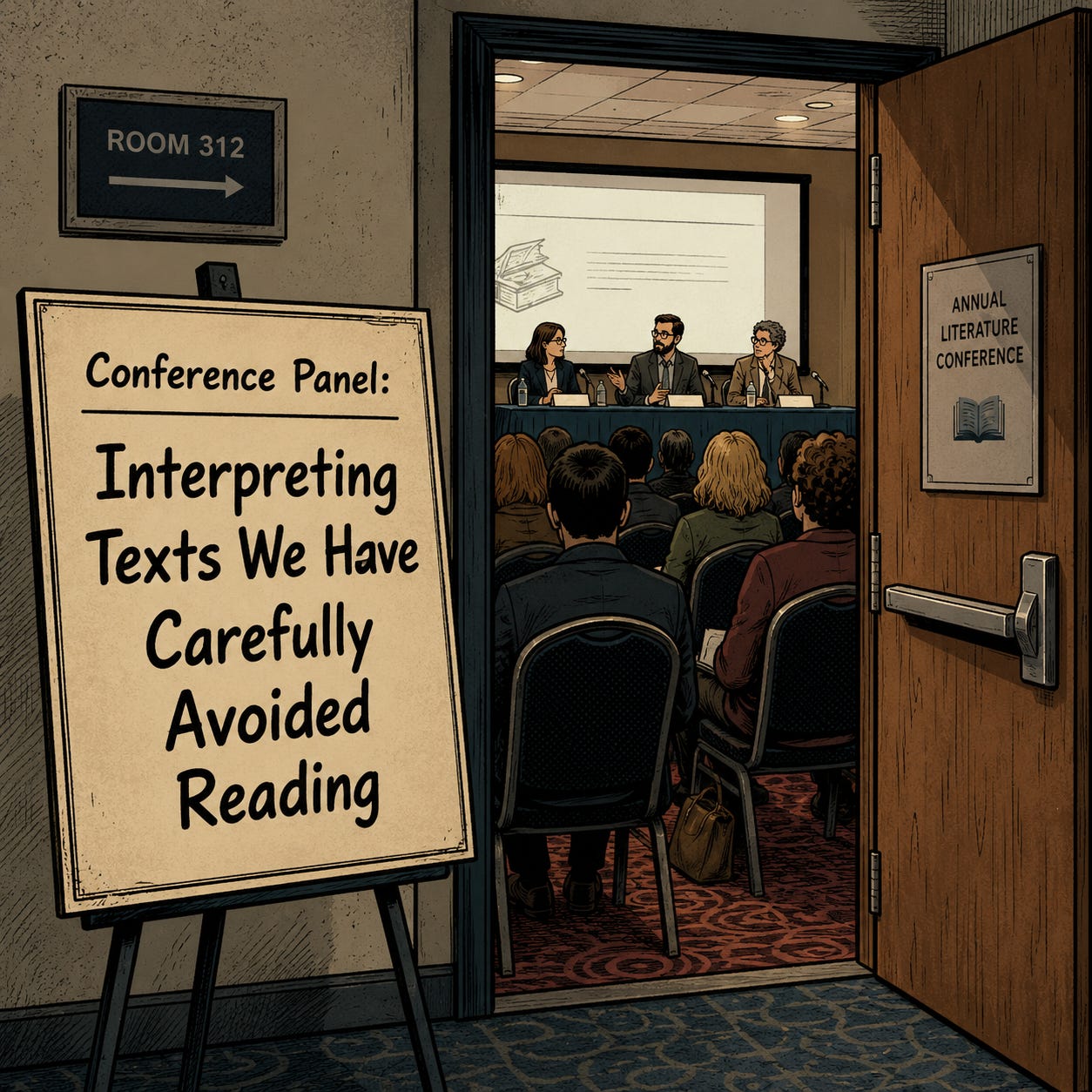
A lot of the outrage directed at Jon falls into exactly that category. Students confidently denounced arguments that are simply not in The Coddling of the American Mind. They treated caricatures of the book as if they were the book itself — another terrible sign that their four years at NYU failed to instill certain critical lessons (namely, that you should know what you’re talking about before you talk about it).
That should worry people. Curiosity is supposed to be one of the defining virtues of a university education. If students are not even interested enough to read the arguments they are condemning, something has gone wrong.
Thankfully, NYU didn’t cave to the pressure to disinvite Jon. If they had, or if students had successfully disrupted Jon’s remarks, it would have crossed the line from protected protest to mob censorship.
Preventing others from hearing what you personally find objectionable isn’t “more speech.” It’s the heckler’s veto, and it is, as Frederick Douglass once said, “a double wrong.”
You can object to a speaker. You do not get to decide that nobody else may hear him. Kudos to NYU for not caving to that pressure.
5. ‘Commencement speakers should reflect our values.’
This is one of those arguments that sounds reasonable for about four seconds.
Then you find yourself asking, Whose values?
The graduating class does not have one set of values. No large university does. Conservative students, religious students and, increasingly, Jewish students routinely sit through speakers, trainings, and institutional messaging that do not reflect their values. They are expected to deal with it because, well, that’s part and parcel of education.
But when the locally dominant campus ideology is not affirmed, suddenly the speaker “doesn’t reflect our values.”
That is the expectation of confirmation: the belief that an educational institution should echo your worldview rather than challenge it. I warned about this in Freedom From Speech years ago. In a proper academic environment, students would not merely tolerate speakers they disagree with; they would actively seek them out and relish the opportunity to engage with them.
You should want at least some speakers who make you think, “Wait, is that wrong — or am I?”
That is not oppression. That is learning.
6. ‘The Coddling of the American Mind is anti-DEI.’
No. What Jon and I criticized was not the idea that universities should be fair, welcoming, or open to people from every background. Those are good goals. What we criticized was a particular kind of identity politics that we thought was bad for students, bad for learning, and bad for coalition-building. Those are not the same thing, but defenders of the campus DEI bureaucracy often use this motte-and-bailey technique to avoid recognizing this.
In Coddling, Jon and I contrasted common-humanity identity politics with common-enemy identity politics. Common-humanity politics tries to expand the circle of concern. It says, in effect, We are different in important ways, but we are also human beings who can reason together, work together, and appeal to shared principles.
Common-enemy identity politics does almost the opposite. It sorts people into simplistic moral categories — oppressor and oppressed, good and bad, safe and dangerous — and then treats disagreement as evidence of corruption. That makes durable coalitions difficult or impossible to create or maintain. After all, why persuade someone if your theory already tells you they are morally contaminated? Why build bridges if your worldview rewards burning them down?
That is what we objected to. A campus can be welcoming without being intellectually suffocating. It can care about fairness without telling students they are breakable. It can oppose bigotry without teaching students that every awkward comment is aggression, or that every disagreement is an attack on their identity.
This distinction should not be difficult to recognize, but somehow it has become one of the hardest things in the world for people to grasp.
7. ‘Old guys shouldn’t lecture young people.’
Uh…that is pretty much exactly the job description of a commencement speaker.
Commencement speeches have traditionally been an opportunity for older, wiser people to try to pass along wisdom to younger people before everyone takes pictures and goes to Chili’s (Ok, maybe the Chili’s part was just me, but hey, I really liked it in undergrad because it was cheap). Sometimes the speeches are profound. Sometimes they are a fog machine of platitudes. But they are always older people trying to give some life advice to younger people. That’s kind of the point.
What are we supposed to do — have some high school kid come onstage to talk to college graduates?
Obviously, age doesn’t always equate to wisdom. Turn on cable news for three minutes. The point is that people who have studied, built, failed, suffered, governed, researched, or fought for something may know a thing or two that a graduating class does not yet know, and might find helpful or inspiring.
That possibility should be exciting, not offensive.
The actual lesson here: You have agency and you should use it
Jon told NYU graduates to pay attention. Pay attention to your mind. Pay attention to your friends. Pay attention to the real world. Pay attention to what your phone is doing to you. Pay attention to what kind of person you are becoming.
That is not an attack on students. It is a compliment. It assumes they are adults. It assumes they can choose. It assumes they are capable of doing hard things.
And that, ultimately, is what The Coddling of the American Mind was about, too. Not contempt for young people, but respect for their strength.
I’ll be blunt: Jon and I were right about a lot. We were right that these new attitudes students possessed when they started hitting campus around 2012 would be harmful to both academic freedom and free speech. We were right that teaching young people to see disagreement as danger would make them more anxious, more censorial, and less prepared for adult life. We were right that “always trust your feelings” is terrible advice. We were right that common-enemy politics would make campuses angrier, more brittle, and less capable of building real coalitions. We were right that a culture of safetyism would not stay confined to campus.
And, as Rikki Schlott and I showed in The Canceling of the American Mind, we were right to warn that these habits would spread outward into journalism, nonprofits, corporations, K–12 schools, medicine, law, and the arts.
If you think Coddling was just about college kids, read Canceling. And read Musa al-Gharbi’s We Have Never Been Woke, too, because it makes a point many elite graduates badly need to hear: Much of what passes for radicalism in America’s prestige institutions is often just the culture, status competition, and moral vocabulary of the upper professional class.
The people who told you that you were too fragile to get through life were lying to you. Maybe they meant well. Maybe they thought they were being compassionate. But they were wrong. And at some point — hopefully before graduation, but if not, soon after — your life becomes your own.
It is no longer on them. It is on you.
You can keep proceeding according to the local norms of America’s elite finishing schools: avoid taboo books, adopt the approved opinions, speak in the approved phrases, and mistake social conformity for moral courage. Or you can take seriously the possibility that you are mistaken about some things, likely many things. You can read the books you were told not to read. You can face the arguments you have been avoiding. You can seek out the smartest people who disagree with you and ask the most adult question there is: What if I’m wrong?
Otherwise, you risk carrying the prejudices of America’s upper classes into adult life while congratulating yourself for being a rebel. That is just conformity with better branding.
So criticize Jon. Criticize me. Criticize Coddling. Criticize Canceling. Criticize We Have Never Been Woke. Criticize the criticism until everyone involved needs a nap.
But first, read them.
Then argue with what they actually say.
That would be a pretty good start.
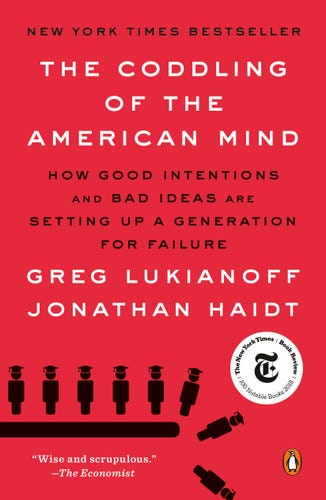
If you’d like to read before commenting, order a copy of The Coddling of the American Mind.
SHOT FOR THE ROAD
I recently got a sneak preview of The Narcissist’s Playbook featuring actress Evan Rachel Wood, psychotherapist Dr. Christine Louis de Canonville, and diagnosed narcissist Professor Sam Vaknin. The film looks at true human evil in the form of malignant narcissism, including interviews with world-renowned experts and four self-aware malignant narcissists. Everyone should see it when it comes out (a general release date is TBD, but early backers will see it on May 30). It’s scarier than you think.
I assigned Coddling to a university class, but I introduced it to my students by pointing that that it would be incorrect to read the book as an indictment of them. Instead, I said, it catalogued what we, their elders, had done and failed to do. They still didn't want to read it but, well, I insisted. And most ended up finding it a revelation. One heartbreaking example: they asked me--a late boomer--if it was really true that kids used to just run around freely without supervision. Yes, I said, that's true. I'm not at all surprised, but it's a shame that so many graduating seniors have so little compunction about judging a book and author based on nothing more than rumors and ideology.
Great article, and I particularly loved this quote:
“For one thing, a university is not a mirror. It is not supposed to show students an image of themselves with better lighting. At its best, it exposes them to people who know things they do not know, who see things they do not see, or who may even be wrong in useful ways. That’s the purpose of a university education: to cause reflection, not be a reflection.”