

Story of the week
Trump’s War on Lawyers Is a Threat to Everyone (The Dispatch) by Adam Goldstein & me
Lawyers are not an optional accessory in a constitutional republic. They make rights enforceable. If a university tramples your free speech rights, if an agency violates due process, if a state retaliates against dissent, if the federal government starts treating opposition as disloyalty—your rights do not leap off the page and defend themselves. You need counsel. You need somebody willing to take your case, file your brief, walk into court, and tell the government, on the record, that it has gone too far.
Speech Restrictions Justified by Child Safety Rarely Stop There (The Bedrock Principle) by Margaret Chambers
The social media ban reflects a dangerous and familiar pattern: governments begin by regulating in the least controversial domain—children’s safety—and then expand those mechanisms into speech and access to information. As Australia’s eSafety office collaborates with the EU Commission and the UK’s Ofcom on frameworks for “media literacy”, “critical thinking”, and “confident, informed online engagement,” the underlying assumption is that citizens, adults included, cannot be trusted to discern truth for themselves.
This week in ERI
The War on Law Firms

A few days ago, Greg and I published a piece in The Dispatch about the Trump administration’s executive orders targeting major law firms. Go read it, if you haven’t, but the short version is that people generally aren’t appreciating that the administration’s targeting of law firms is an attack on everyone’s ability to check governmental power, because l…
This week in Expression
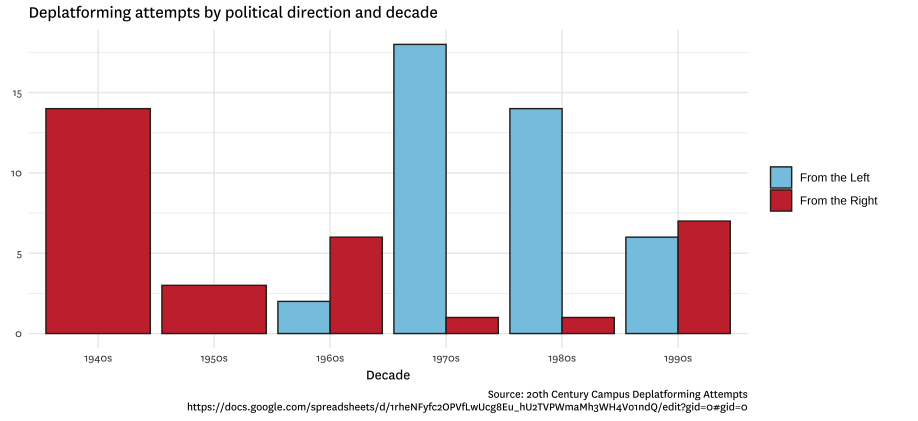
UK government admits the obvious: Free countries shouldn’t police legal speech by Sarah McLaughlin
Finnish Supreme Court fines politician over religious pamphlet deemed hate speech by Sarah McLaughlin
The images a Florida city says only it can use by Carrie Robison
The UK is testing digital curfews. Social media bans for teens might be next by Sarah McLaughlin
This week on So to Speak
This week So to Speak host & FIRE EVP Nico Perrino talked with Techdirt CEO & founder Mike Masnick about the recent verdicts in California and New Mexico courts holding Meta and Google liable for failing to protect young users from harm and their implications for free speech.
This week in FIRE’s blog
“School administrators can’t pick and choose which opinions students are allowed to express,” said FIRE Supervising Senior Attorney Conor Fitzpatrick. “Voicing an opinion which makes others upset is not ‘harassment’ or ‘intimidation,’ it is American democracy in action.”
London Calling: Ronnie’s First Amendment Roundup
Supreme Court (8-1) holds that applying Colorado’s conversion-therapy ban to conversations between counselors and minor clients is viewpoint-based speech regulation subject to strict scrutiny, reinforcing that professional speech does not lose First Amendment protection simply because it occurs in a licensed setting
The Supreme Court reversed the U.S. Court of Appeals for the Tenth Circuit and Colorado’s federal district court by holding a state law barring licensed counselors from undertaking “conversion therapy” with minors – that is, practices or treatment to change a person’s sexual orientation or gender identity, or their related behavior, gender expressions, or sexual/romantic attractions to individuals of the same sex – is viewpoint-discriminatory under the First Amendment as applied to talk therapy.
Following reminders that the First Amendment protects the inalienable right to decide for oneself how to speak, that regulating speech based on subject matter, content, and/or viewpoint is presumptively unconstitutional, and that there are but a few clearly identified, longstanding, and narrowly drawn categories of content that do not automatically get strict scrutiny, the Court first reaffirms that “a law regulating the content of speech cannot avoid searching First Amendment review just because it mostly regulates non-expressive conduct.” Or, put differently, “Just because a law may generally function as a regulation of conduct … does not exempt it from demanding First Amendment review when a government seeks to apply that law to speech alone.”
Nor does First Amendment protection, the Court continued “turn on the fact that a licensed professional happens to be speaking.” Rather, those protections “extend to licensed professionals as much as they do to everyone else,” and “dangers associated with censorship … are no less acute in the fields of medicine than they are anywhere else.”
And this is where the courts below erred, the Court explained—that is, in failing to subject Colorado’s law to demanding First Amendment review in its application to licensed healthcare professionals who conduct talk therapy. Because, so applied, the law regulates not only therapists’ speech—in fact, it regulates only their speech—and not just its content, but what views they may and may not express. They may express acceptance, support, and understanding for facilitation of identity exploration, and/or offer words of assistance for those undergoing gender transition; but if a client seeks counsel toward changing their sexual orientation or gender identity, behaviors, or romantic attractions, the law forbids it—even if that’s what a client seeks or hopes to achieve. In short, therapists cannot voice perspectives the state disfavors when speaking with consenting clients. That makes the law viewpoint-discriminatory in application to talk therapy, and thus subject to strict scrutiny, which the lower courts did not conduct, and which the Supreme Court has elsewhere said it is the “rare case” that a speech restriction can withstand.
The Court notes that licensed professionals often have good-faith disagreements about the efficacy and/or ethics of practices in their fields, including medicine, where “consensus … is not static” but “evolves and always has,” such that a “prevailing standard of care may reflect what most practitioners believe today, but it cannot mark the outer boundary of what they may say tomorrow.” That is why the First Amendment rests the “simple truth” that “the people lose whenever the government transforms prevailing opinion into enforced conformity.” So, the fact “that the State’s viewpoint regulation targets only licensed healthcare professionals … changes nothing.” The Court thus sums up as follows:
Colorado may regard its policy as essential to public health and safety. Certainly, censorious governments throughout history have believed the same. But the First Amendment stands as a shield against any effort to enforce orthodoxy in thought or speech in this country. It reflects instead a judgment that every American possesses an inalienable right to think and speak freely, and a faith in the free marketplace of ideas as the best means for discovering truth. However well-intentioned, any law that suppresses speech based on viewpoint represents an “egregious” assault on both of those commitments.
International free speech stories of the week
When Racism Is a Crime: Brazil Puts a Tourist on Trial for Word and Gesture (NYT) by Ana Ionova & Lucia Cholakian Herrera
In Brazil, a majority Black country that is still grappling with the legacy of centuries of slavery, the case has been viewed in a starkly different light.
Racism has been enshrined in Brazil’s Constitution as a crime since 1988, but prosecutions are rare.
After a recent push by activists and lawmakers for more accountability, Brazil has implemented some of the strictest antiracism laws in the world.
American journalist kidnapped in Iraq (NBC) by Matt Lavietes, Mirna Alsharif, Abigail Williams & Chantal Da Silva
Court rules Papagomo guilty of sedition, RM4,000 fine imposed for post against King (MalayMail)
Book of the week
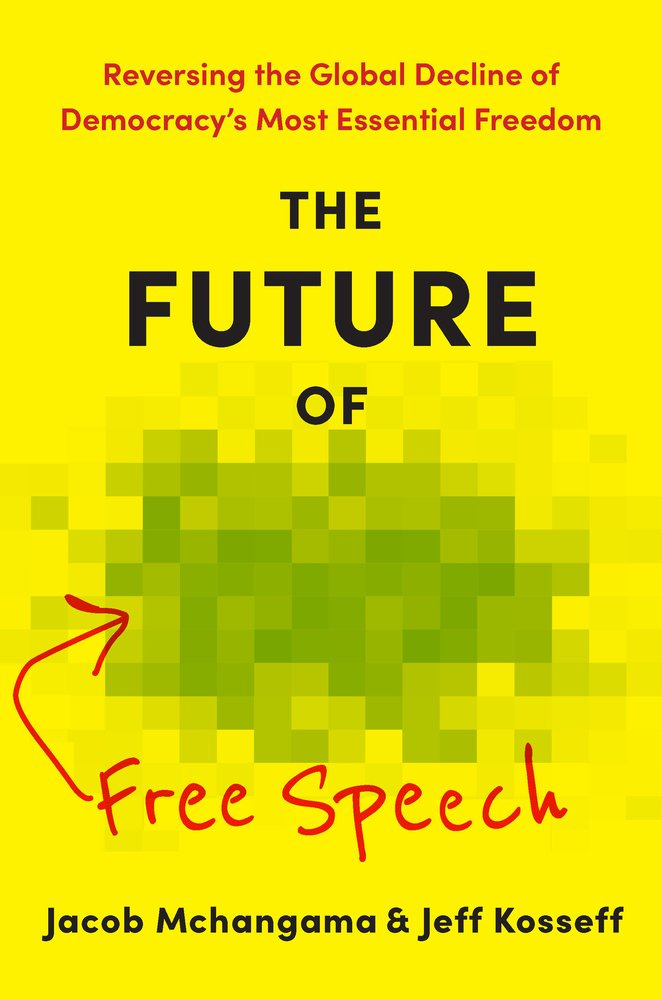
The Future of Free Speech by FIRE Senior Fellow Jacob Mchangama & US Naval Academy cybersecurity law professor Jeff Kosseff, hits shelves Monday so make sure to order a copy! And in case you missed it, they had a great piece on the recent social media rulings in CA & NM in the Wall Street Journal last week.
I consider myself a free speech absolutist, but I'm fine with a ban on social media usage before age 16. Is there some gotcha that I'm missing?
Quite confused to not notice any coverage of the Missouri v. Biden settlement on this site. Is my skimming bad? Did I miss something? Is it possible ERI has some kind of aversion against Aaron Kheriaty and other Covid-policy dissidents? I sure hope not!