

Story of the week
When I talk about the Islamic regime or lack of free speech, I’m not just talking about prisons and torture. I’m also talking about how it tries to control what people feel, what people sing, and what people are allowed to enjoy. Even music had to be approved. When I was the president of the music club at the University of Tehran, they wouldn’t let me play Persian or pop music. I once submitted a program for a concert in which I was going to play themes from “Hotel California,” but I wrote “Beethoven” down as the composer. It was approved. But the fact that I even had to ask, and fear of what might happen if I was caught. Even joy had to be monitored. That’s how these systems work. They don’t just want to control your body. They want to control your spirit. The Islamic revolution in Iran happened in 1979 and it’s been 1984 every year since.
All federal officials, from President Trump on down, take an oath to uphold the Constitution. Attempting to have political opponents — or anyone — jailed for their protected expression flatly violates that oath. The Framers intended the First Amendment to prohibit precisely such an abuse of power.
This week in Expression
When speech no longer seems sufficient, part II by Samuel J. Abrams
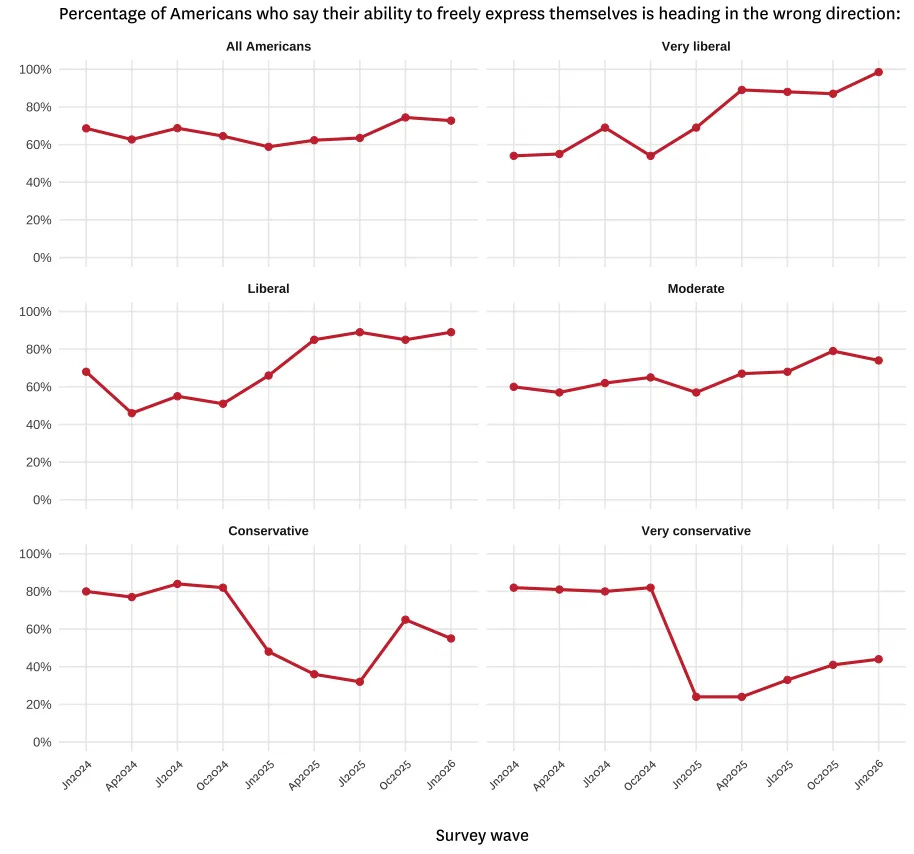
Poll: Americans continue to say free speech is in decline by Sean Stevens
Spain considers banning teens from social media and holding tech executives criminally responsible for ‘hate speech’ by Sarah McLaughlin
This week in FIRE’s blog
FIRE sues Bondi, Noem for censoring Facebook group and app reporting ICE activity
You talkin’ to me? New York City official wants to turn yellow cabs into speech police by Stephanie Jablonsky
Two Universities. Two Posters. One First Amendment Problem by Amanda Nordstrom
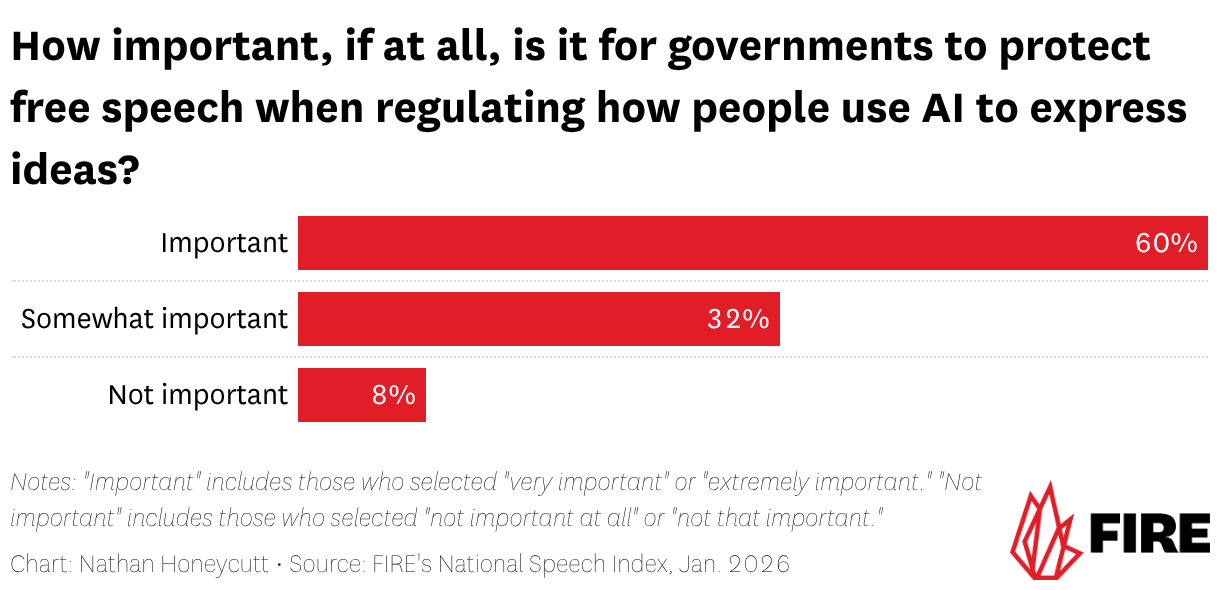
FIRE POLL: Americans overwhelmingly want free speech protected in AI regulation
FIRE in the press!
A culture of free speech does not grant anyone the right to be loved, amplified, platformed, or shielded from scorn. It does not guarantee an op-ed in the New York Times or a massive social media following. The point is narrower and sturdier: in institutions devoted to inquiry — universities above all — the default response to disagreeable ideas should be argument and critique, not purges and punishments. Students should be habituated to respond to ideas they dislike with arguments that articulate the substance of their disagreement, not incentivized to build echo chambers of conformity. They need not be polite or pull rhetorical punches; they can peacefully protest and use epithets if they so wish.
In other words, you can condemn the speaker’s views and condemn efforts to prevent the event from taking place. You can reject the censor’s worldview while also rejecting censorious tactics by the censor’s opponents. Anyone who works in the field of free speech recognizes this instantly. I cannot count the number of times I have argued with people who believe that “misinformation,” “hate speech,” or other poorly defined categories should be prohibited. Yet, like most other civil-libertarian proponents of free speech, my response is not to demand that people who argue for censorship be cancelled.
Two Colleges, Two Different Responses to the Heckler’s Veto (RealClear Education) by Samuel J. Abrams
Liberal education depends on a basic civic bargain: people may disagree fiercely, but they must still share an environment in which argument is possible. Universities exist not to eliminate conflict, but to channel conflict into inquiry and persuasion rather than intimidation. When disruption replaces argument, the institution is no longer educating. It is merely managing competing factions.
The Trump administration is using secretive orders to crack down on dissent (MSNOW) by Sarah McLaughlin
There is no better guarantee of the right to speak and criticize our government than the First Amendment, which stands as guard between us and the power of the state. But our right to express ourselves, particularly in ways that displease the government, is under attack — sometimes echoing authoritarian censorship efforts abroad. Americans must understand that with enough time and pressure, even the strongest of foundations can weather down to dust.
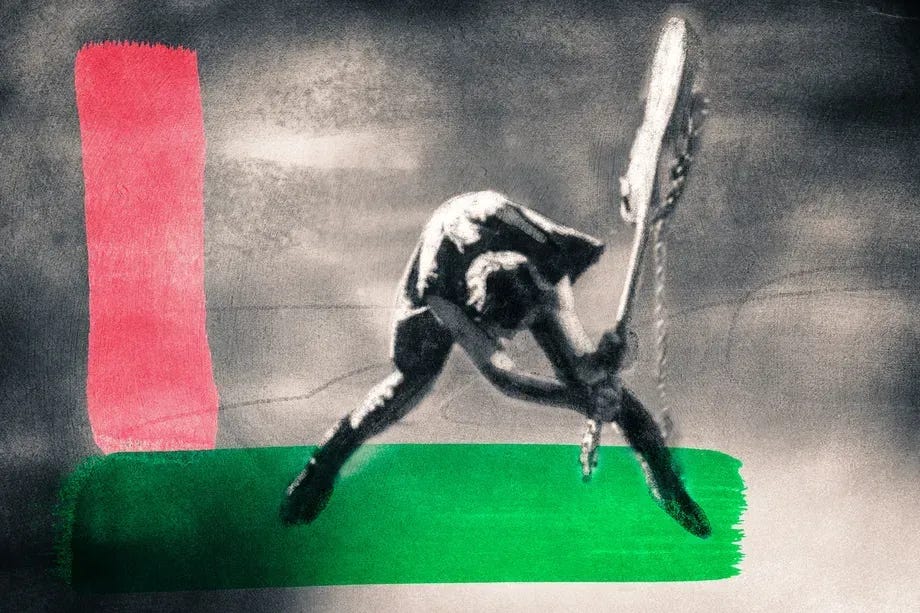
London Calling: Ronnie’s First Amendment Roundup
D.C. federal court issues strong First Amendment decision preliminarily enjoining Defense Secretary, DOD, and Navy from punishing Senator and former Navy Captain and NASA Astronaut Mark Kelly for remarks on armed forces members refusing illegal orders, holding the defendants “trampled on Senator Kelly’s First Amendment freedoms and threatened the constitutional liberties of millions of military retirees.”
Holding Senator Kelly likely to succeed on his First Amendment retaliation claim, the U.S. District Court in D.C. preliminarily enjoined efforts to censure him and reopen his Navy Captain retirement rank – and his retirement pay/benefits – for appearing with other former armed-forces/intelligence-officer members of Congress in a video entreating U.S. military forces that “Our laws are clear. You can refuse illegal orders.”
The court started by issuing important reminders that courts are fully competent to hear constitutional claims involving military personnel (even if decisions on armed forces composition, training, equipping, and control lie with military leadership) and that, especially given the irreparable harm constitutional violations cause, First Amendment retaliation claims do not require exhausting administrative remedies (here, military appeals processes). It then held that to whatever extent free speech protections may be limited for active-duty military, “no court has ever extended those principles to retired servicemembers, much less a retired servicemember serving in Congress and exercising oversight responsibility over the military.” “Indeed,” the court remarked, “if legislators do not feel free to express their views and the views of their constituents without fear of reprisal by the Executive, our representative system of Government cannot function!”
The court deemed the requirement for retaliatory action sufficient to deter a person of ordinary firmness met by the censure letter for Senator Kelly’s speech placed in his military personnel file and usable to his future detriment, as it threatened “criminal prosecution or further administrative action” and to dock rank and pay. It “does not minimize … entitlement to be free from reprisal for exercising … First Amendment rights,” the court held, that “Senator Kelly may be an ‘unusually staunch individual’” who continued to speak after receiving the letter. The court then held it “cannot be disputed” his speech caused the unconstitutional retaliation, noting, “The Letter of Censure could hardly be clearer: it is censuring him for ‘engaging in a sustained pattern of public statements’ that criticized military operations as illegal and counseled military servicemembers to refuse illegal orders.” (Senator Kelly also alleged viewpoint discrimination, but as likely success on retaliation suffices for a preliminary injunction, the court held it needn’t reach the other claim—though the court did offer a strong footnote indicating likely success on that front, too.)
All of which allowed the court to easily hold Senator Kelly is suffering irreparable harm from incursion on his First Amendment rights, and that the balance of equities and public interest favor relief, especially considering “it is a particularly valuable asset for our country to have retired veterans contributing to public discussion on military matters and policy.” The court thus granted a preliminary injunction, with the closing admonition that: “Rather than trying to shrink the First Amendment liberties of retired servicemembers, Secretary Hegseth and his fellow Defendants might reflect and be grateful for the wisdom and expertise that retired servicemembers have brought to public discussions and debate on military matters in our Nation over the past 250 years.”
International free speech stories of the week
Queensland moves to ban pro-Palestine slogan ‘from the river to the sea’ under sweeping new hate speech laws (The Guardian) by Benita Kolovos
The legislation includes a new offence prohibiting the public distribution, publication, display or recitation of proscribed phrases, where the conduct is intended to cause menace, harassment or offence.
The attorney general, Deb Frecklington, confirmed “globalise the intifada” and “from the river to the sea” would be included as proscribed phrases.
“These sayings have no place in Queensland, when they are used to incite hatred, offence and menace,” she said.
UK Palestine Action ban ruled unlawful, in humiliating blow for ministers (The Guardian) by Haroon Siddique
Putin accused of ‘total censorship’ after blocking WhatsApp (The Times) by Tom Parfitt
Thai man’s prison term for royal insult extended to 50 years (The Straits Times)
Superhero show of the month
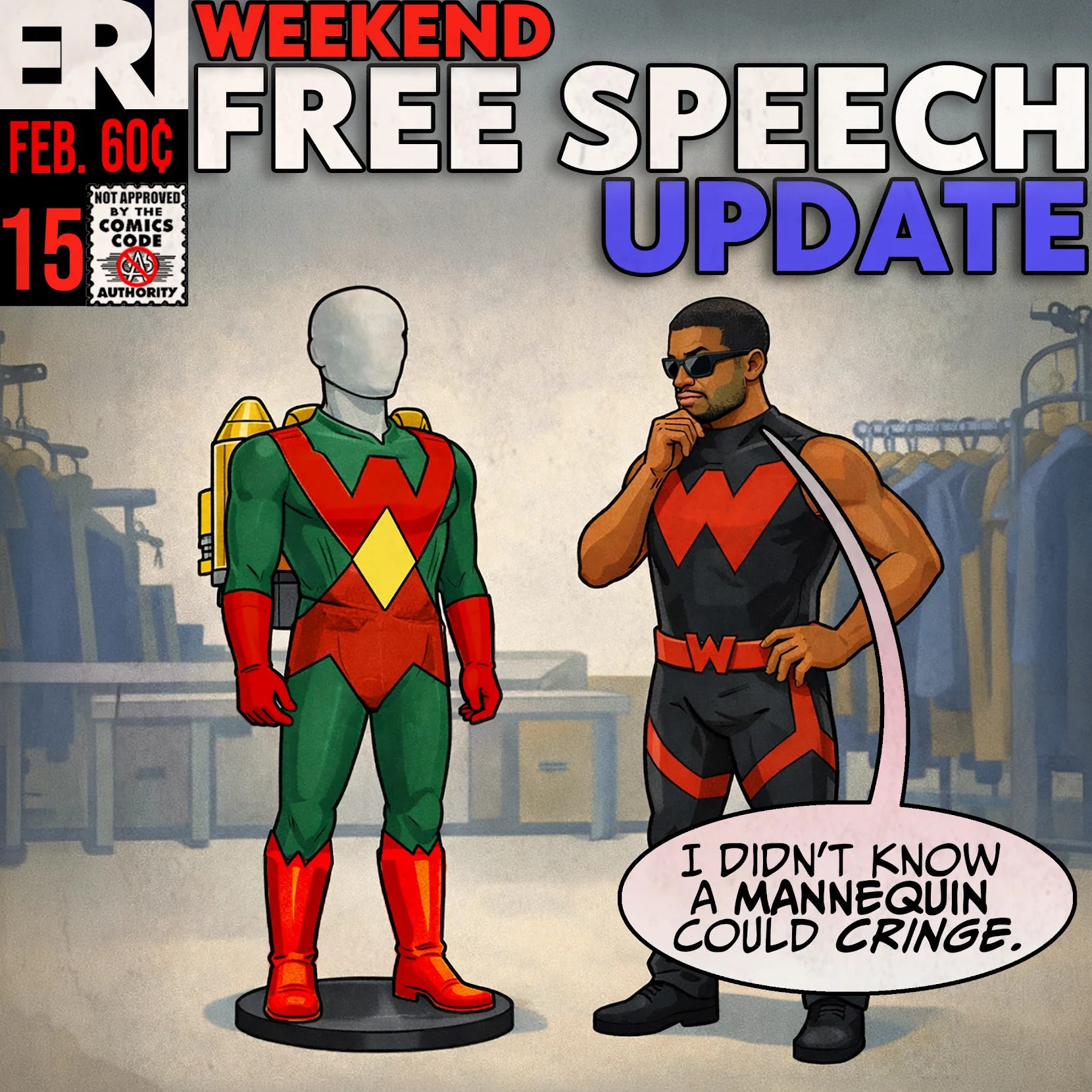
One thing many of you likely don’t know about me is that I’m a huge fan of Wonder Man. Yes, I’m talking about the limited series today, but I mean long before that. I mean Simon Williams: introduced—and seemingly killed off—in Avengers #9 (1964) after betraying the team and then redeeming himself.
Almost indestructible, with a punch that can feel like it hits nearly as hard as Thor’s hammer, Simon then spent years, well, dead, before Marvel finally resurrected him (well sort of, it’s complicated)—first as a figure plagued with self-doubt, and then as the version I came to love: the rare superhero who actually just kind of loved being a superhero. A smart guy with a sense of humor about himself, who decided to use his powers to get famous and have some fun in Hollywood.
And yes, he was on the team during one of the Avengers’ worst moments—Avengers #200 (1980, don’t ask!)—but he was also there during plenty of their best. And if we’re talking about the “walking it back” moment people often point to afterward, that’s generally Avengers Annual #10 (1981), which revisits the fallout. And it also features an amazing battle between the Avengers and the brotherhood of evil mutants written by Chris Claremont!
Then he became a founding member of the West Coast Avengers, which launched with that four-issue limited series (1984) and practically glowed with promise. For me, the book doesn’t really meet its true greatness again until John Byrne takes over with West Coast Avengers #42 (1989), and then—starting with #47 (1989)—the title is renamed Avengers West Coast on the cover, with Byrne’s run carrying through Avengers West Coast #57 (1990) (and, for the completists, Avengers West Coast Annual #4 (1990)).
So when I heard Marvel was doing a series on Wonder Man, I got really worried they were just going to mess it up badly. I mean, Daredevil: Born Again was awesome, but I thought Secret Invasion was one of the worst things ever done (yes, let’s make a Skrull who we’re not sure we can trust infinitely powerful because… Don’t we all love the Super-Skrull?). I couldn’t get past the opening episode of Ironheart, and—aside from one episode —Agatha All Along I found just kind of terrible. Not to say there weren’t some good moments, including Ms. Marvel, which I actually thought was quite good, if a touch slow.
But here Marvel decided to do something entirely different. They take Simon’s desire to be a Hollywood star, cast Yahya Abdul-Mateen II as Simon Williams, and pair him with Oscar-winner Ben Kingsley, who really shines in comedy in a way that’s just delightful to watch.
And they made it a deeply personal story about, yes, someone with superpowers who’s hiding them, but primarily about an actor who has been hiding himself his whole life and only really feels alive as an actor. It’s a story about the kind of friendship that can develop when you share a love for film and acting, and it’s just expertly done.
They also got the visual stuff pitch perfect. They made his best Wonder Man look—the classic sleeveless suit with the big “W”—the default, and then used that great “second-best” vibe of his more casual look (the red jacket and black turtleneck) exactly where it belongs. And they even managed to turn what I consider his absolute worst costume into the punchline for the retro Wonder Man movie gag, which is exactly how you do fan service without getting trapped by it.
It also, by the way, features Doorman, a real Marvel character who debuts in West Coast Avengers #46 (1989)—and the episode where he accidentally disappears Josh Gaz (Olaf from Frozen) is laugh-out-loud funny.
Really, Wonder Man is kind of a masterpiece in a genre that’s still finding its footing again. And if we get more like this, I think it’ll find its way. I highly recommend Wonder Man. Enjoy—and let me know what you think!
The situation with Mark Kelly is interesting, especially considering the First Amendment. Especially as a retired military person, he has the right to exercise his First Amendment right to freedom of speech. I watched his video more than once. It was obvious to me the message he intended to send — resist any order from President Trump or Secretary Hegseth — but, most importantly, that is not what he actually said. The literal message was to refuse illegal orders, which should be an unnecessary reminder, but OK, let’s be reminded: no military person is ever required to follow illegal orders. That is made clear in the UCMJ, which all active duty personnel know inside and out (😜).
The subtext — we all know it was there, because we are all familiar with Mr Kelly’s politics — was that any order from President Trump should be considered as illegal. Of course, we all also know that isn’t true; and, again, that is not what he said.
Simply based on what was clearly stated in that video, Mr Kelly did nothing for which we can legally or morally chastise him. Any legal action would only serve to waste time and money on a forgone conclusion.
It’s frustrating, I know, because we all “know” what he meant when he very carefully paraphrased the UCMJ. But there is no Constitutional basis for charging him with anything simply for stating the obvious. Without proof of intent, there is no case. Which is essentially what the grand jury decided when it refused to indict him. 😎🇺🇸
I also support Mark Kelly's right to demonstrate that he is slick hustler on TV, so that everybody can see.